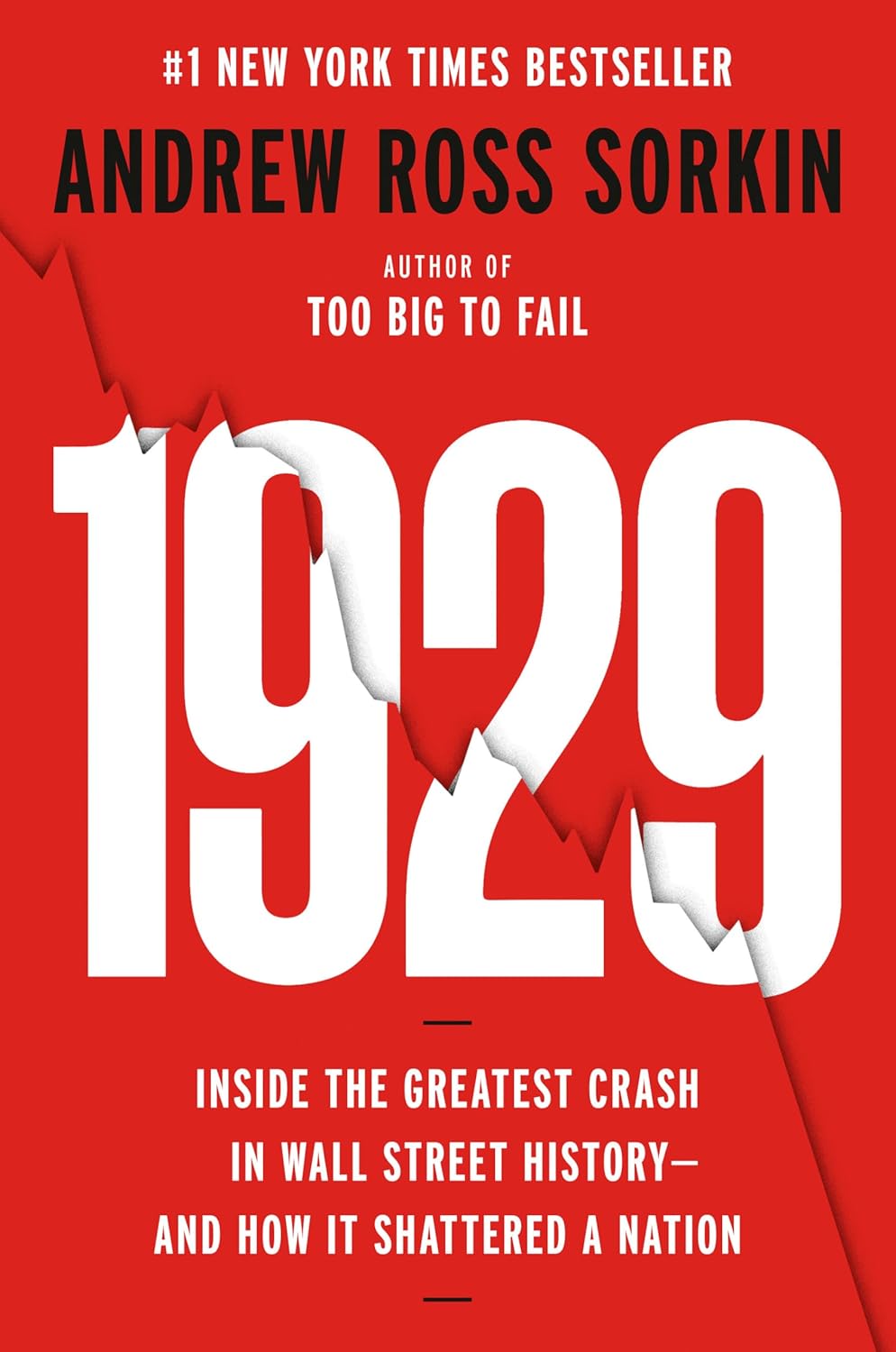
“1929: Inside the Greatest Crash in Wall Street History — and How It Shattered a Nation,” by Andrew Ross Sorkin (Viking, 2025, 592 pages, $35.00)
My father was in his tenth year when Oct. 29, 1929 — Black Tuesday — set in motion the Great Depression. My mother had turned six two years before.
While their parents were Midwest farmers who managed to keep food on the table, the stock market crash and its aftermath ingrained in them a profound frugality, and that in turn influenced many of the decisions I made as a youth and young adult. It was with this background that I opened “1929,” by Andrew Sorkin, and devoured it in a matter of days.
Sorkin is a financial analyst for The New York Times and the author of the best seller “Too Big to Fail,” (2009), about the financial crisis of 2008. “1929” is the product of more than eight years of research built on private letters, diaries, memos, notes, oral histories, court records, board transcripts, depositions and lawsuits. In addition to its primary focus, there are fascinating asides on New York City history and the lifestyles of the era’s rich and famous.
Sorkin writes that during the Roaring — and seemingly prosperous — Twenties, there were underlying financial imbalances and a massive bifurcation of American society. The U.S. government under President Calvin Coolidge engaged in an extreme form of laissez-faire. Coolidge was proudly committed to slashing taxes and restoring the federal government to its pre-World War I size and capacity.
Presidents Herbert Hoover and Franklin Roosevelt would preside over the Depression. Other figures portrayed in the book include politicians lower on the pecking order, bankers, businessmen such as Henry Ford and speculators ranging from Joseph Kennedy to Groucho Marx, who had to mortgage his home to cover losses from an investment in RCA.
Sorkin concludes that with a couple of exceptions, the era’s major financial figures did not do anything appreciably worse than what most individuals would have done in their positions and circumstances. However, by encouraging speculation and promising outsized returns to inexperienced investors, the titans and bankers of Wall Street helped magnify the damage when the collapse finally came.
“Temptation has driven human folly for centuries, whether the serpent in the garden of Eden or the market manias of cryptocurrency or artificial intelligence,” Sorkin writes. “Each wave seduces us into thinking that we have learned from history and, this time, we can’t be fooled.”
Sorkin’s book is a reminder of how easily we forget.
Contact Ted Ayres at tdamsa76@yahoo.com.