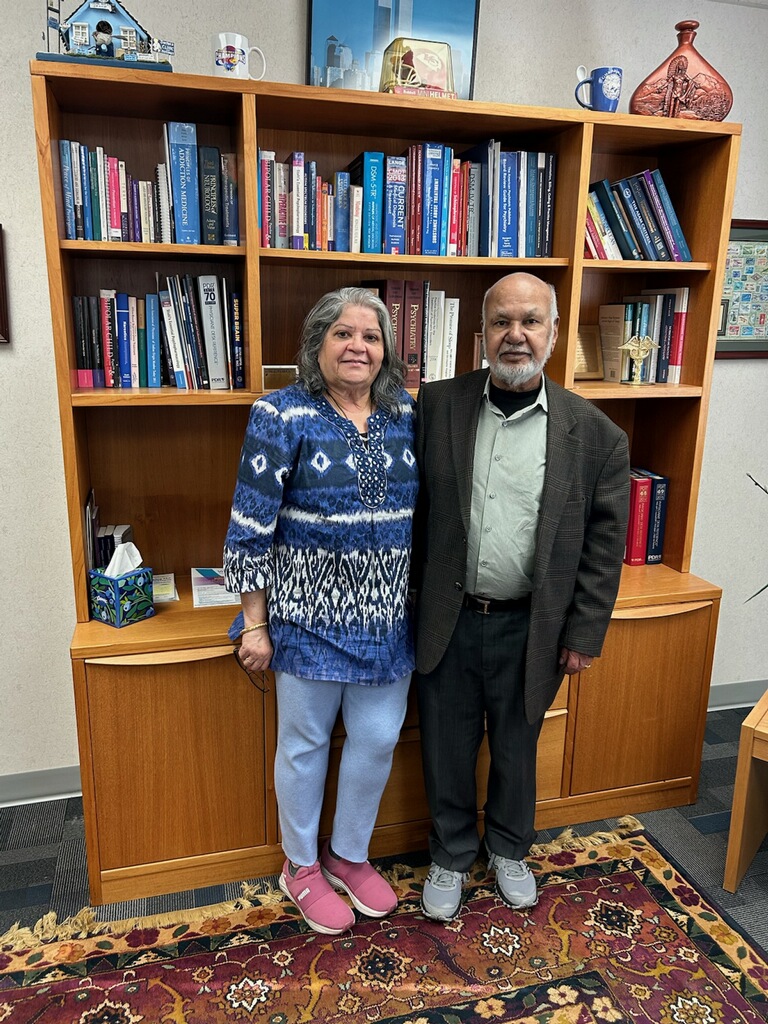
For more than 40 years, Wichita psychiatrist Ralph Bharati has used his expertise to help unlock the doors of the minds of those experiencing mental health issues, helping thousands of patients over the decades. So after a long and successful career, what were his thoughts when he turned 80 last year?
It wasn’t of vacations, afternoon naps or watching sports all day as a retired person. He wasn’t even thinking about retirement.
“I’d like to work another five years,” Bharati said. “Then I might retire or go to part time.”
From his office in east Wichita, Bharati spoke of all the reasons he doesn’t want to retire.
“I feel good. As long as I am physically and mentally able, I will work,” Bharati said.
From a career that started as a veterinarian in his native India, Bharati today is the medical director of PsychCare KS, where he still sees 30 to 40 patients a week, often spending weekends on call to address emergencies. His office database contains the names of more than 30,000 current and former patients, and he estimates he’s seen 100,000 patients throughout his career. On top of the individuals he sees in private practice, in previous years Bharati spent his evenings calling on patients in area hospitals where he would often make rounds until 10 p.m. at night.
He continues to enjoy the challenges of his work and the ever-changing scientific side of medicine and therapy.
“I am still learning every day,” Bharati said. “It’s a mix of science and art, and I feel like I am still contributing to people’s lives and to society. It’s rewarding to see my patients getting better.”
Contributing to society
Bharati is not alone. While the average age of retirement in Kansas is 65, more workers are choosing to work later into their years because of the personal fulfillment their careers provide, including a sense of purpose, social connection, enjoying the work itself, better health and more options for flexible and remote work — a trend that increased during COVID. For these individuals, work provides meaning, a sense of identity and a structure to the day, and studies show that work can help maintain mental sharpness and helps combat isolation. According to a report from the University of Michigan Nation Poll on Healthy Aging, two thirds of those who work after age 50 say that working boosts their physical and mental health and their overall wellbeing.
Growing older does not necessarily lessen an individual’s value in the workforce either, and in fact, the skills of an older employee can enrich an office. Contributions such as years of experience, mentoring younger workers — Bharati still welcomes interns into his office to get hands-on experience — and a committed work ethic are values sorely needed in the business climate today.
There are other reasons why older adults choose to stay in the workforce longer. Financial readiness for retirement is key, including an individual’s savings, debt and the cost of living. Events over the past several years have directly influenced the amount of time spent in the workforce: The recession of 2008; the COVID crisis and recent inflationary trends have taken a direct hit out of many people’s savings and changed their retirement timelines. Many people will spend more years in retirement, which will require greater savings if they don’t want to outlive their money.
Today’s workforce also expects to work longer based on Social Security eligibility. For most of Social Security’s history, the full retirement age was 65, but that is gradually rising. In 2022, the full retirement age was set at 67 for those born in 1960 or later. And while 62 is the starting age of eligibility for Social Security benefits, age 65 is the milestone for receiving health insurance.
In his younger years, Bharati said he did not have a specific retirement age in mind but knew he would likely be working past his 60s.
“When I started my practice, I had loans and debts to worry about,” Bharati said.
For married workers, joint spousal decisions also affect retirement timing, and the goals of a couple or an individual must be considered: Will you stay in your current home, and is it paid off? Move to a resort location where costs may be higher? Plan on extensive travel or costly hobbies? Will health concerns dip into your retirement funds?
Bharati’s wife Nalini, 69, works alongside him in the practice. She will retire when he does.
For now, Bharati says he feels well and wants to continue helping others get better.
“Physically and mentally, as long as I can do the work, I will do it,” he said. “What else would I be doing?”
Retirement by the numbers
*The average age of retirement in the United States ranges from 62 to 65; in Kansas, it is 65.
*Average retirement age for men hovers around age 65; for women, it is slightly lower at 63.
*Retirement ages have increased from 1991, when the average age was 57.
*Common reasons for this delayed retirement include people living longer and facing greater financial challenges.
*Some choosing to stay in the workforce are interested in personal fulfillment, saying that working boosts their physical and mental health and their overall wellbeing.
Contact Sherry Howerton at sgaylegraham@hotmail.com.