The evidence is clear that exercise helps us live longer and feel better, both physically and mentally. Still, most people over 65 are not getting the recommended minimum amount of exercise.
Part of the problem may be that walking into a crowded gym full of strangers and unfamiliar exercise machines can feel intimidating. Some personal trainers, on the other hand, offer private studios where adults can work one on one with certified professionals.
One of them is Aaron Stucky, whose path to personal training began when he was a high school coach in Pretty Prairie. He started a summer training program in the off-season and soon added an adult program at the request of students’ parents. After moving to Wichita, he worked at the YMCA and became an ACE-certified personal trainer. When the pandemic closed the YMCA temporarily in 2020, he pivoted and turned an outbuilding at his home into a fully equipped studio.
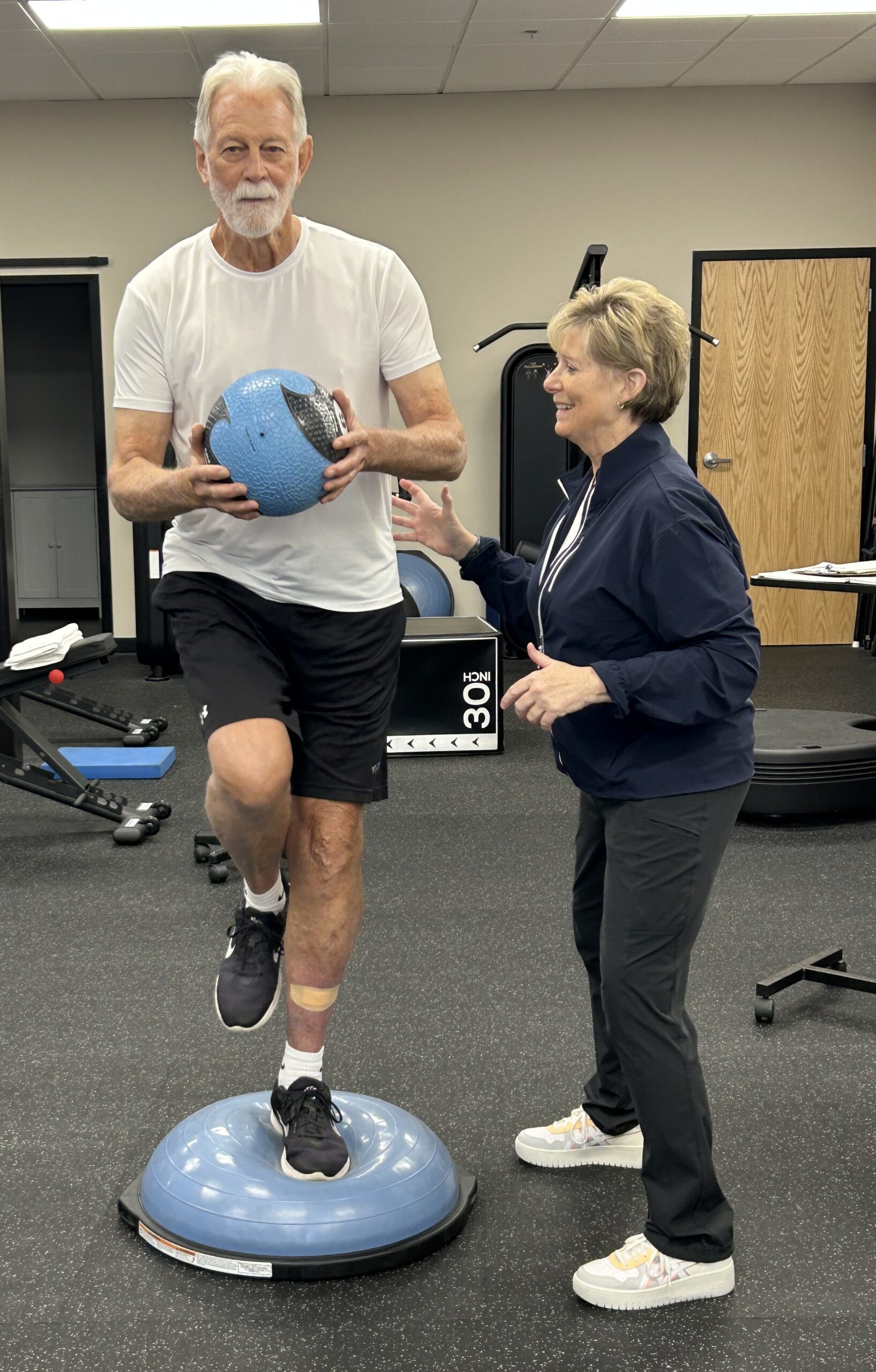
Another is Wendy Williamson, who opened Williamson Wellness Center, a personal training facility, 14 years ago. She has five personal training certificates, including Certified Functional Aging Specialist. She often receives referrals from medical specialties and is known for low back pain assistance, pre and post surgery. Before training begins, she gathers a health history and completes a full body assessment and movement screen. She considers an initial interview as critical to knowing where to begin.
“Seniors are so wonderful and are usually so anxious to learn and have people to listen to them,” she said. “The most-frequent thing that brings people to us is, ‘I know I need to get stronger.’ The private facility is also a draw since a lot of people don’t want to go to a large fitness facility.”
Williamson considers safety the most important aspect of her time with seniors. “We begin with seated or table work and slowly progress to standing exercises,” she said. “Being very attentive is critical.”

One client’s path
Dennis Brown, 65, returned to Wichita in 2001 after spending two decades in Los Angeles and Dallas working in television and film as a production designer. By then, it became clear that his aging parents needed help if they were going to remain in their home. By 2023, both had died, and Brown found himself at a point many caregivers recognize: One day the work is constant, and the next day, it is suddenly over.
Over the caregiving years when it was hard to leave the house and daily movement was limited, Brown had gradually gained weight. He started by walking at the Sedgwick County Zoo and on a treadmill, aiming for 10,000 steps a day. In eight months, he lost about 50 pounds. He realized walking was a great start, but he wanted more. Because group classes did not appeal to him, a relative who had worked with Stucky at the YMCA recommended his private sessions. The one-on-one setting gave Brown room to ask questions, talk openly and learn how to move safely. “He is part fitness trainer and part therapist,” Brown said.
Stucky and Brown keep the long view in mind, even when a workout is tough in the moment. After Brown had a fall that left him with lingering shoulder pain, Stucky adjusted the exercises so he could rebound safely.
Over time, Brown became comfortable enough to join Stucky’s small group training sessions, which focus on balance and functional strength. He also discovered something reassuring: Most people are too focused on their own workout to notice what he is doing.
Brown said having set appointments with Stucky on his calendar helped him structure the rest of his days. His advice is to start as he did with movement you can repeat, such as walking. Strength and balance work with a professional helped him feel steadier and more confident. A trainer personalized the process and held him accountable.
For one couple, training supports aging well
Judi Pavelski first met Stucky at the YMCA and followed him when he opened his own training space. Her husband Dick joined later at her suggestion, though not without hesitation.
“I’m not one for exercise,” Dick said. “I like swimming. I like pickleball. I don’t like working out.” Judi even warned Stucky that Dick’s past workout programs usually ended within a month. This time, however, he stayed.
“By the time I leave there, I feel so good,” he said. “It’s about challenging yourself and doing better.”
“It’s not just weight training,” Judi said. “It’s a combination of cognitive, weight and balance altogether.”
At 75 and 77, Judi and Dick see their training as less about dramatic transformation than being confident and aging well. Judi, a former runner, compares the body to an old car: if small repairs are ignored, bigger problems follow. Dick wants to keep playing pickleball, swim for endurance and enjoy the social connection that comes with staying active.
How to choose a personal trainer
Spend some time with prospective trainers asking about their experience and approach to working with senior clients.
• Do they have a personal training certification or a college degree in anatomy or physiology?
• How much experience do they have in prescribing and adapting exercise programs for older adults?
• Did they ask about your fitness level, health concerns, past surgeries and what your personal goals are in an exercise program?
• Research the cost/benefit of personal trainers versus group sessions. People often assume the extra expense is beyond their budget. Talk to the trainer about half-hour or one-hour sessions that might be more affordable for you.
• Ask for recommendations from those who have worked with the trainer.
Contact Cecilia Green at Cecgreen1@comcast.net.