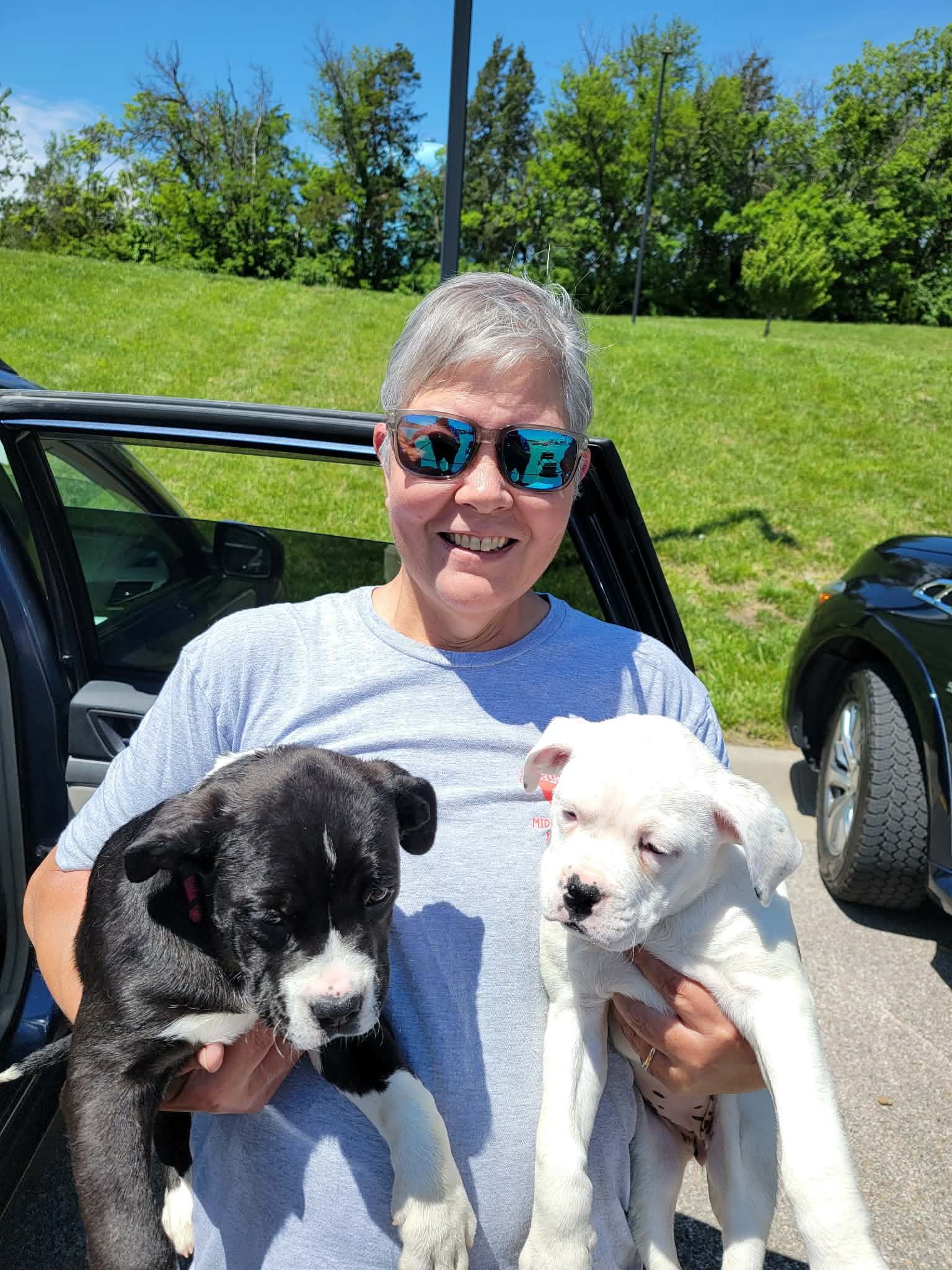
Edith Clark has put over 300,000 miles on her 2013 Subaru Outback. She hasn’t logged all those miles taking cross-country vacations. Clark, who lives in Newton, has racked up more than 100,000 miles transporting homeless animals in the seven years since she retired.
Clark is one of many older volunteers who participate in pet transport, which is the moving of animals in need of care from high-kill shelters to no-kill pet rescue organizations and, hopefully, permanent homes. In April alone, she transported 160 dogs.
“I love knowing these animals are going to a better life,” Clark said. “Some of them have had such terrible back stories. It feels good knowing they’ll find a home instead of being chained up or neglected. And, of course, there’s all the puppy kisses I get.”
Second chances
With pet populations being at all-time highs, thousands of dogs, cats and other domestic animals end up in shelters across the country. Many are at risk of being euthanized, having never had the chance to find a loving home.
That’s why animal rescue groups and concerned individuals work with area shelters to find homes for these pets, taking them journeys often referred to as “freedom rides.” Some journeys involve 10 or more interchanges between drivers before a pet reaches its destination. Clark recently collected eight-week-old sibling puppies that had been driven from the Guyman Animal Shelter to Wichita by another transporter and drove them to Emporia, handing them over to another transporter. The puppies were bound for Adopt-a-Pal Rescue in Cedar Rapids, Iowa, which will try to place them in homes.
Ginger Thull has been a volunteer transport coordinator for 11 years, arranging for pets to get from point A to point B. She typically posts requests for drivers on Facebook, where volunteers can see what legs of the transport haven’t been spoken for. Transports are not undertaken until all legs of a route are taken.
Thull monitors each transport to make sure it’s running on time. Most routes are set up to take no more than an hour to an hour-and-a-half one way. Drivers pay for their own gasoline.
It is not unusual for Thull to arrange 40 to 50 transports a month. She relishes the opportunity to make a difference in the world of animal rescue.
“Really, the transporter has the best job in rescue,” said Thull. “They get to take the animal from a bad situation and deliver it to a good situation. It’s a win-win.”
Transporters benefit in other ways, as well. As a tight-knit community, they build friendships with others who have the same interest and passion in saving animals. For retired individuals with time to spare, transporting helps fill their days with meaningful activity.
“There are a lot of social benefits to this type of work,” Thull said. “You get to meet somebody who enjoys driving these precious pets as much as you do. I want the drivers to love what they do.”
Thull points out that a volunteer doesn’t have to drive every day or even every week.
“If you’re free once a month, we’ll take it. We will absolutely appreciate it,” said Thull.
Saving God’s creatures
Bob and Nancy Livingston started transporting pets almost three years ago when Nancy found the opportunity in a Facebook post for Wichita KS area transporters. Bob said at his last count about six months ago, the couple had transported more than 300 pets. He takes a photo of each animal they transport, prints them and stores them in photo albums.
“I know the stories of all of these animals,” Bob said. “It is such a blessing to be able to do this. We are so grateful. All of these animals are so sweet. Most of them have been someone’s pet at one time or another, and they all deserve a second chance.”
While most transports involve dogs and cats, Bob said one time they transported a goat from Wichita to a farm in Oklahoma. He laughs at the memory of stopping along the way to walk the goat on a leash, and how he caught a passerby taking his photo.
“He was just like a dog,” Bob said of walking the goat. “I can only imagine what that person was thinking”
The Livingstons consider transporting animals to be the Lord’s work, Bob said.
“We are taking them from whatever their past was and helping them open a new chapter in their lives, to continue down the road to get good care and be showered with love. It’s so gratifying to us.”
Ways to help
With gas prices on the rise, Thull says there has been a shortage of drivers in recent months. There are other opportunities for volunteers to help if an individual cannot transport animals long distances. Sometimes, shelters and rescues just need to get an animal to and from an area vet appointment — a local transport. Or to pick up dog food or supplies from a store and deliver them to a rescue. Or donate gas money to be used by someone who is willing to drive but cannot afford the gas.
“For anyone interested in assisting in rescue, there’s a lot of ways to help,” Thull said. “The need is just so great, and it’s such a rewarding endeavor.”
For more information, Thull can be reached at (785) 545-8221.
Contact Sherry Graham Howerton at sgaylegraham@hotmail.com